




Automotive logistics China 2007 - Home
  Contact us  Automotive Logistics Magazine  Automotive Logistics Russia  Register now  English version  Chinese version
Register now
HOME
CHINA 2008
ARCHIVES
Photo Gallery
2008 BROCHURE

Download PDF
2008 Conferences
ULTIMA MEDIA
  About us
 

  Events
 

  Publications
 

Automotive Logistics China 2009 conference
21-23 April 2009, Shanghai, China

+++ The Automotive Logistics China 2008 conference has taken place +++

Great interaction at Automotive Logistics
China conference

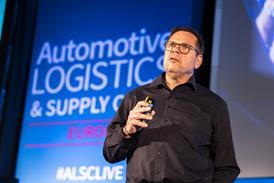
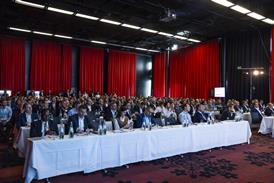
Automotive Logistics China More than 250 senior automotive executives came together at this year’s Automotive Logistics China conference to discuss the future of the industry in this rapidly expanding market.

Among them where representatives from more than 30 carmakers, many of them important local players.

For the first time delegates could use an voting system which made the conference even more interactive and encouraged lively debate.

Many delegates have testified that they found the Automotive Logistics China conference beneficial, interesting and enjoyable.

You can now register for the 2009 conference

We are still looking at a venue for the 2009 event and will make a decision soon after carefully evaluating the feedback from this year's conference.

In the meantime, if you would like us to keep you updated about our conferences, please click here

+++ The Automotive Logistics China 2008 conference has taken place +++

The rise of the dragon

More than 270 delegates representing Chinese and Western carmakers, Tier suppliers and logistics service providers (LSPs) gathered at the Shangri-La Hotel in Beijing for the 5th Automotive Logistics China conference from April 15 to 17. The theme of this event was “China is now.” The country produced 8.8 million vehicles in 2007, with export and imports growing more than 50 per cent to 915,000 (615,000 of which were exports). But logistics costs remain higher in China, at 18.5 per cent of GDP – nearly twice that in developed markets. A survey done at the conference revealed that 85 per cent of delegates expect the real price of logistics to rise in the next five years. GM’s Robert Strain said that OEMs and LSPs would have to work together closely to limit these rises, because logistics is now an increasingly deciding factor for China’s competitiveness as its currency appreciates and labour, fuel and material costs continue to rise quickly.

China’s market is consolidating, according to Zengrong Ma of the China Federation of Logistics and Purchasing, as both OEMs and LSPs find the advantages of leveraging their scales. However, Owen Xi of NYK Car Carriers China revealed that there is a one thousand OEMs in China, with some exporting as few as one or two vehicles per year. Of that, there are more than 50 OEMs of larger sizes, and many individual LSPs to serve them. Yong Wie, the Transport and Logistics Division Chief for the government’s National Development and Reform Commission, said: “Small, scattered local [logistics] players cannot serve the consolidated, large companies in China.”

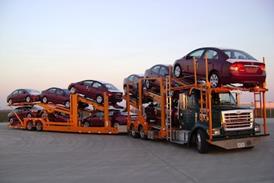
Regarding the transport of cars, the regulations continue to be a major topic of concern. The legal limit of trucks is 16.5 metres, which means only four cars can legally be loaded at once, according to NYK Car Carriers’s Xi. What’s more, Yong says that 85 per cent of the trucks on the road disregard this limit. Since taking these trucks away is not economically viable, he would like to introduce a permit that would makes them legal until new size requirements can be phased in.

David Zhang, from Delphi Automotive Systems said that local, Chinese OEMs do not focus enough on logistics. The model remains “pay on usage” for material flow, which means that suppliers take all the responsibility for transport. “While this might be good for cash flow, it leads to a lack of visibility and consolidation for the material flow. In the end, the OEM will eventually pay for the consequences,” he said. He also pointed out that the lack of real-time visibility and communication between the supplier and OEM was leading to gaps in production versus demand, which he revealed had reached RMB 2million in one case for Delphi and an OEM. “Local OEMs need to rely on a 3PL to resolve the current pay-on-usage model,” he said.

Some expressed the wish for a 4PL and lead logistics provider (LLP) model to emerge in China. But vehicle makers expressed a desire for LSPs who own physical assets. BMW’s Cliff Chen said, “International players have not invested enough in China. They don’t have enough of their own warehouses and trucks. Companies who own assets have a better chance to manage costs, since they are not stuck in the middle of OEMs and subcontractors.”

Delphi’s Wojtek Wojcik said that vehicle-making processes were, out of necessity, becoming increasingly lean and the company was trying to work more closely with its suppliers to improve logistics. However, he too expressed some doubt over the LLP model in China. “We have not yet found an LLP to cover this region with the consistent focus that we require,” he said.


Don't miss the next issue, click here for one-year FREE subscription
Are you part of the automotive logistics industry?
If you are, you are entitled to a FREE
Subscription
to Automotive Logistics magazine -
the leading source of information for
senior executives worldwide.
AUTOMOTIVE LOGISTICS


May/June edition now online